I chose our twin daughters over my wife, and I have been eating myself alive since. My wife’s mother didn’t speak to me for three months. Then she came to my door holding an envelope and said, “There’s something about my daughter I can’t hide from you anymore.”
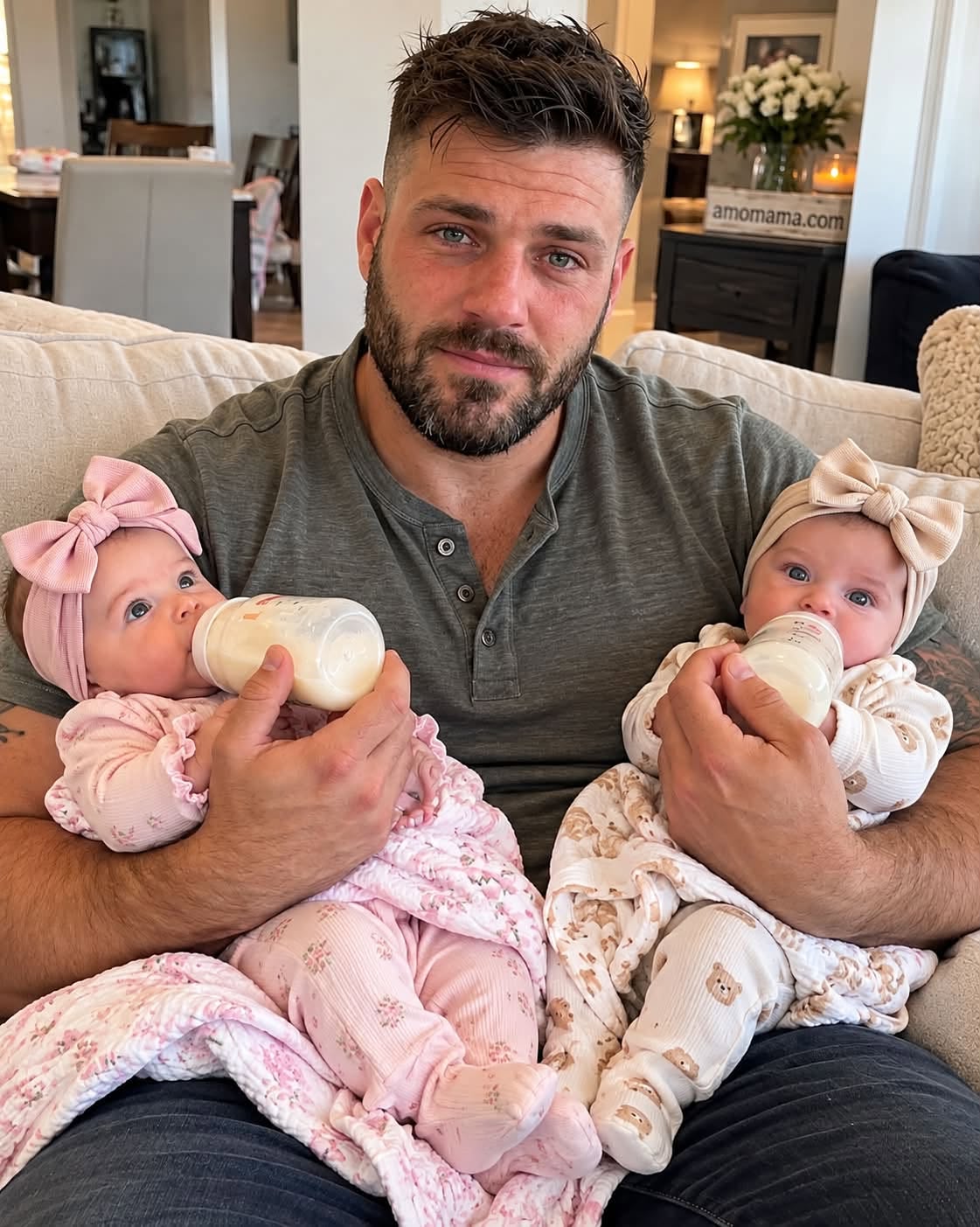

I chose our twin daughters over my wife, and I have been eating myself alive since. My wife’s mother didn’t speak to me for three months. Then she came to my door holding an envelope and said, “There’s something about my daughter I can’t hide from you anymore.”

I began explaining before she had stepped inside. I had been rehearsing it in my head for months, though none of the versions sounded right once I tried to say them.
“I didn’t want to lose her,” I said. “She asked me to, and I, I should have done something. I should have at least, ”
“I know,” she said.
“No. You don’t understand. I agreed to it.”
She looked down at the envelope in her hands. “Do you think I stayed away because I blame you?”
I couldn’t answer. She had not spoken to me at the funeral. Afterward, when I sent pictures of the girls, she replied, “Thank you.” Nothing more. I had told myself I understood. I might have done the same in her place.
That morning, before everything changed, Mary and I were still arguing about names. She didn’t want matching names just because the girls were twins. I thought we should have settled it sooner.
“We don’t have to make their names go together,” she said.
“I know. I just thought we’d have picked them by now.”
“We have two names. We just don’t agree on which girl gets which.”
“That’s not the same as deciding.”
She laughed and asked me to pass her the water. We were having an ordinary disagreement, the kind that had no real consequence. I remember that more clearly than some of what happened later.
By evening I was beside Mary’s bed, holding her hand while people I had never met spoke around us. I was trying to follow what they were saying. Then someone asked what we wanted them to prioritize.
I looked at Mary. I could not make myself answer first.
“Mary, ”
She squeezed my fingers.
“The girls. Obviously the girls.”
I waited. I kept waiting for someone to tell us there was another way, or for Mary to change her mind. I wanted to hear a sentence that would take the decision out of our hands.
“Please,” she said.
So I agreed.
The moment did not feel like choosing one person over another. It felt like answering Mary. It was only afterward, when she was gone and the girls were still here, that the words began to sound different in my head.
I came home with our daughters and a bag of Mary’s things. Her sweatshirt was in it, the one she had arrived in. I still haven’t washed it. At first, I did not know what to do with the bag, so I left it where it was and tried to learn how to care for two newborns without her.
People said the same thing to me: “Stay strong. Those girls need you.”
I knew they meant well. I also heard the instruction inside it. Get up. Feed them. Keep going. Don’t fall apart where they can see.
So I got up at night. I warmed bottles and wrote down how much each girl took because I was too tired to keep it straight in my head. I stood over their cribs for twenty minutes at a time, watching to make sure they were breathing. When one cried, I went to her. When the other woke, I went back.
My sister brought food around. Days later, she threw it out, untouched. She didn’t scold me. She started bringing smaller amounts and asking whether I wanted her to stay for a while.
“I’m fine,” I told her once.
“You haven’t eaten much.”
“I’m looking after them.”
“I know. Let me hold one.”
“I can do it.”
She waited a moment. “You don’t have to do every part by yourself.”
I knew that was true. I still found it easier to refuse help than to admit I needed it. My jeans stopped fitting, and I didn’t think about that until someone pointed it out. The girls needed me every few hours. By then, most things I did were measured in feeds and stretches of sleep.
When the house went quiet, the question came back. What if I’d said something else?
I would try to remember the room exactly, as if getting the details right might change the answer. Mary had squeezed my fingers. She had said the girls. She had said please. I knew all of that, and still I would think: I agreed. I had said the words aloud.
Mary’s mother had been there through none of my nights at home.
I did not blame her for being absent. She had lost her daughter. I knew I could not ask her to comfort me about a decision Mary had made in front of both of us.
At the funeral, she did not speak to me. I didn’t try to make her. Afterward, I sent pictures of the girls because I thought she should see them. Her reply was always short.
“Thank you.”
I would look at those two words and wonder whether they were all she could manage or all she wanted from me. I never asked. I had no clean way to ask a grieving woman whether she thought I had failed her daughter.
Then, last Thursday, the doorbell rang. Mary’s mother was standing outside with the envelope. She looked tired. I started talking too quickly.
“I didn’t want to lose her,” I said. “I keep going over it. I should have asked for more time, or told them to try something else. I should have, ”
“I know,” she said again.
“You can’t know what it’s been like.”
“No,” she said. “I can’t. But I know what Mary asked for.”
I stopped. She held the envelope between both hands, her eyes on it.
“Do you think I stayed away because I blame you?”
I couldn’t answer. I had been asking myself that question for three months and had not found a way to ask her.
“Mary asked me not to tell you,” she said. “I promised her. I thought she’d have time to tell you herself.”
She came in, and we sat down. The girls were nearby. I was aware of them, but I didn’t turn away from her.
“What did she ask you not to tell me?”
Her mother opened the envelope. Inside was a letter in Mary’s handwriting. She said Mary had given it to her before the birth, after they had talked privately about the girls and about what might happen if the delivery became difficult. Her mother had promised not to give it to me unless Mary could not tell me herself.
“I thought she’d be the one to explain it,” she said. “I thought there would be time.”
I looked at the letter. “You’ve had this since before?”
“Yes.”
“And you didn’t think I needed to know?”
“She wanted to tell you. I didn’t want to take that from her.”
“That left me thinking you hated me.”
Her mother rubbed her thumb along the edge of the envelope. “I was angry that she was gone. I was angry at the whole thing. I couldn’t look at you without seeing that room, and I knew you had been the one who answered.”
“You heard her ask for the girls.”
“I did.” Her voice caught, then steadied. “I knew what she said. I still couldn’t talk to you.”
I took the letter from the envelope. Mary had written that she wanted the girls, and that she wanted me to trust her when she said so. She knew I would blame myself if she died. She had asked her mother to tell me that choosing the girls was not something I had done to her. It was what she wanted, and she wanted me to raise them without treating their lives as a debt I owed her.
I read it once. Then I read it again, slower.
“She knew I’d think I should have done something different,” I said.
“Yes.”
“Why didn’t she tell me herself?”
“She meant to. She kept saying she would. I thought there was time.”
That was the thing her mother had carried for three months: not proof that there had been a way to save Mary, not a secret that could undo what happened. Mary had asked her to protect a sentence until she could say it herself. Her mother had kept the promise after there was no longer a chance for Mary to speak.
“You could have told me you were angry,” I said.
“I should have.”
“You could have said you couldn’t talk to me yet.”
“I know. I thought if I came here, I’d have to talk about the decision. I couldn’t.”
“I don’t know what I would have said.”
“Neither did I.”
She didn’t ask me to forgive her. I didn’t tell her that the letter fixed anything. It didn’t. It answered the part I had been trying to answer alone: Mary had meant what she said. She had chosen the girls. She had not asked me to save her instead.
I looked at her mother. “I needed to hear it from you.”
“I know,” she said. “I’m sorry I made you wait.”
I could have told her it was all right. It wasn’t. But the girls were in the next room, and she had come to see them as well as to tell me what Mary had left behind.
“Do you want to see them?” I asked.
“Yes,” she said. “If you’ll let me.”
“I will.”
She went to the girls and stood beside them for a while before asking which one I was holding. I told her. She looked down at her granddaughter, then at the other baby.
“They look like her,” she said.
I didn’t try to answer. She stayed. We talked about the girls’ names, the same names Mary and I had been arguing about that morning. There was no decision to revisit. We were only saying them out loud together.
Before she left, she asked whether she could come back. I told her yes, and that I wanted the girls to know her. She said she would come when I asked, and I told her she didn’t have to wait for an invitation every time.
She had not blamed me. Mary had not blamed me either.
I still miss her. I still have the sweatshirt. But I stopped asking myself whether I should have ignored the words Mary said to me. I did what she asked. I brought our daughters home. Her mother came back into their lives, and I let her.

Leave a Reply

Your email address will not be published. Required fields are marked *