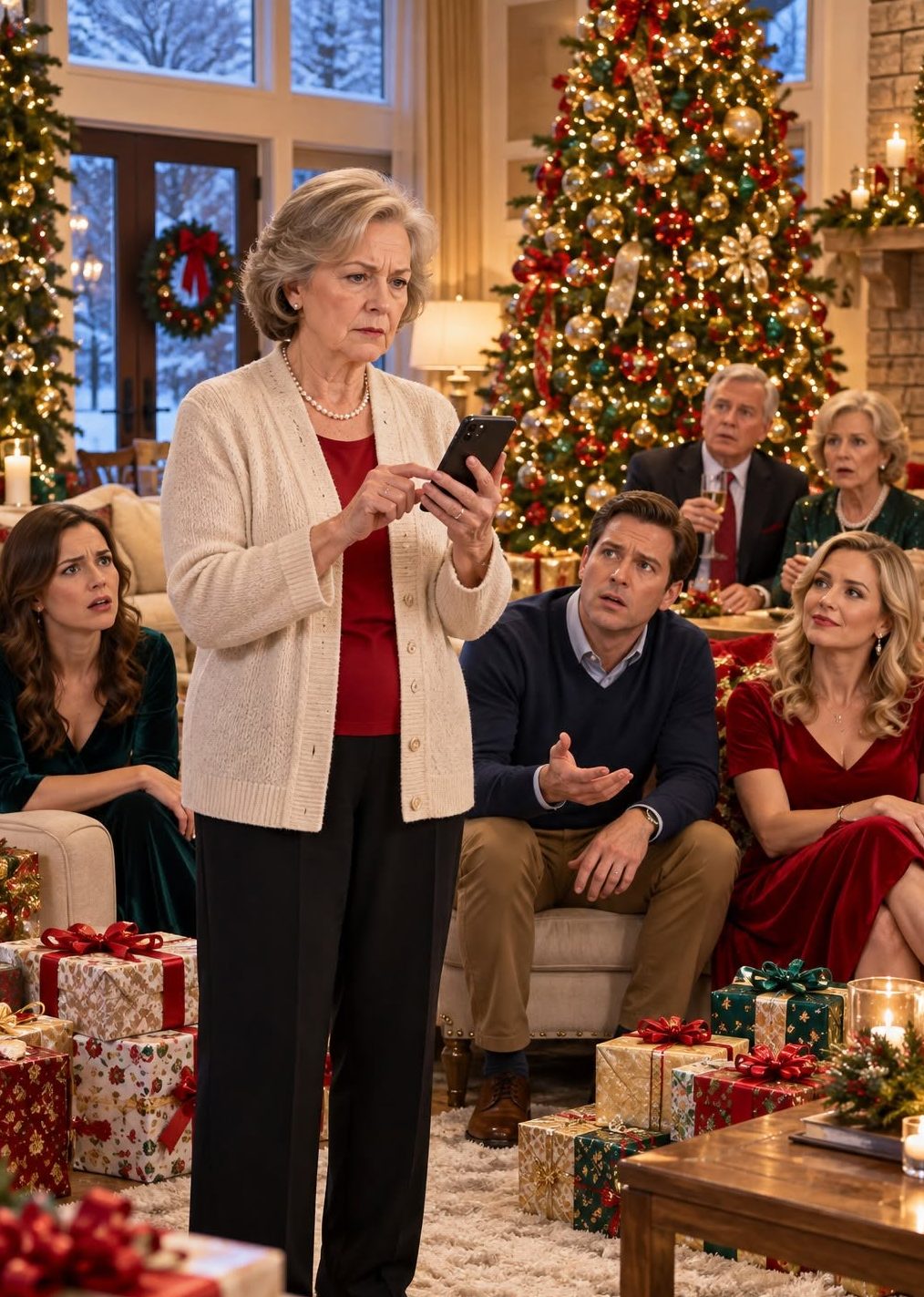
MY SON SAID I DIDN’T DESERVE A CHRISTMAS GIFT. HE HAD NO IDEA HIS CRUELEST WORDS WOULD EXPOSE THE LIE BEHIND OUR FAMILY HOME.

The night my son told me I didn’t deserve a Christmas present, I canceled the $2,800 I sent him every month.

I thought that would be the end of it.

I thought he’d be furious, his wife would call me selfish, and eventually we’d either find a way to repair our relationship or learn to live without each other.

**What I didn’t know was that my son had already prepared legal documents to take control of my entire life.**

And the beautiful house I’d helped him buy?

**It was hiding a secret far worse than an unpaid mortgage.**

My name is Dorothy Whitmore.

I was sixty-three that Christmas, a widow of five years, and until that evening, I believed the greatest tragedy of my life had been losing my husband.

I was wrong.

Losing Gerald had broken my heart.

But what my own son had been planning would have destroyed everything Gerald and I spent forty-one years building.

It started with a Christmas tree, an empty space beneath it, and nine words I will remember for the rest of my life.

**”You have everything you need.

You don’t deserve gifts.”**

My son Wesley said them without raising his voice.

That’s what made them so cruel.

He spoke as though denying his mother a Christmas present was no different from deciding not to buy another bottle of wine.

His wife, Renee, smiled beside him.

Her parents, Ron and Beverly, looked embarrassed.

And my daughter, Cleo, stared at her brother as though she were seeing a stranger.

For a few seconds, nobody moved.

Then I reached into my purse.

I opened my banking app and found the automatic payments that had been leaving my account every month for almost four years.

One payment was $1,950.

The other was $850.

The first helped Wesley and Renee cover their mortgage.

The second paid toward their car.

Together, those payments totaled $2,800 a month.

I’d originally promised to help for six months.

Six months had become a year, then two, then nearly four.

Whenever I suggested that they might be ready to manage without me, Wesley had another emergency.

Property taxes.

Medical bills.

Car repairs.

A broken furnace.

An unexpected insurance increase.

There was always something.

And because he was my son, I kept saying yes.

I’d already given him $62,000 from Gerald’s life insurance to help purchase the house.

I’d paid for part of their backyard fence, contributed to plumbing repairs, and helped replace their furnace.

I never demanded repayment.

I never even asked them to mention my contributions.

I simply believed that helping my son build a stable life was what a loving mother was supposed to do.

But sitting beneath that magnificent Christmas tree, watching everyone else receive beautiful gifts while I was told I didn’t deserve one, something inside me finally changed.

I pressed the confirmation button.

**TRANSFER CANCELED.**

Then I canceled the second payment.

Wesley leaned forward.

“Mom, what are you doing?”

I slipped the phone into my purse.

“Taking your advice, sweetheart.”

“What advice?”

“Prioritizing.”

His expression changed.

“Wait.

Did you just cancel the mortgage payment?”

“And the car payment.”

Renee shot to her feet.

“Dorothy, you can’t do that!”

I looked at her.

“Why not?”

“Because we have bills!”

“So do I.”

Wesley ran a hand through his hair.

“Mom, our mortgage is due next week.”

“Then you’ll have to make arrangements.”

“With what money?”

I glanced toward the leather travel bag he’d just received from his in-laws.

“Perhaps you could start by reconsidering some of your priorities.”

Cleo covered her mouth.

Ron slowly lowered his drink.

“Hold on,” he said.

“Dorothy, you’ve been paying their mortgage?”

I nodded.

“Part of it.

For almost four years.”

“How much?”

“$1,950 for the house and $850 for the car.”

Beverly gasped.

“Every month?”

“Every month.”

Ron stared at Wesley.

“And you told us you’d been handling everything yourselves.”

Wesley’s face darkened.

“This is a private family matter.”

“Apparently not,” Cleo said.

“Because you’ve been lying to the whole family.”

Renee crossed her arms.

“This is unbelievable.

You’re humiliating us in our own home.”

I stood and picked up my coat.

“No, Renee.

I’m simply going home.”

Cleo immediately rose.

“I’ll come with you, Mom.”

We were almost at the hallway when Wesley shouted.

**”Mom, you can’t leave!

There’s something about the house you don’t know!”**

I stopped.

Renee’s face went white.

“Wesley, don’t.”

He looked from his wife to me.

His mouth opened.

Then Renee screamed.

**”WESLEY, DON’T TELL HER!”**

The room fell silent.

Even the Christmas music seemed suddenly too loud.

I turned around slowly.

“What about the house?”

Wesley swallowed.

Renee grabbed his arm.

“Not another word.”

Something in her voice frightened me.

It wasn’t anger anymore.

It was terror.

I looked at my son.

“Wesley, what have you done?”

He stared at the floor.

Then he whispered five words.

**”The house isn’t ours anymore.”**

For a moment, I couldn’t understand what he’d said.

I looked around at the expensive furniture, the gleaming hardwood floors, and the enormous Christmas tree.

“Of course it’s yours,” I said.

“I helped you buy it.”

Wesley closed his eyes.

“That’s what I’m trying to explain.”

Renee stepped between us.

“He’s confused.

We’ve been discussing refinancing, and he’s making it sound dramatic.”

“Then explain it,” Ron demanded.

She glared at him.

“Dad, please stay out of this.”

But Wesley was shaking his head.

“No, Renee.

I’m done lying.”

He looked at me.

“Three years ago, we signed some paperwork.

Renee said it would protect the house if my business ever got sued.”

“What paperwork?”

“A transfer.

Some kind of company ownership arrangement.”

My stomach tightened.

“Whose company?”

Wesley glanced at his wife.

Renee’s expression had become unnaturally still.

He swallowed.

**”The company has your name on it, Mom.”**

I stared at him.

“My name?”

He nodded miserably.

“You’re listed in the documents.”

“Listed how?”

“I don’t know exactly.”

“Wesley.”

His voice cracked.

**”I think you’re legally responsible for more than just the monthly payments.”**

I felt the room tilt slightly.

Cleo was beside me immediately.

“Mom, sit down.”

But I didn’t sit.

I’d worked twenty-seven years in administrative services for our county government.

I wasn’t a lawyer or a real estate expert, but I’d handled enough official paperwork to understand one important principle.

**If somebody had placed my name on property documents without my permission, that was not a harmless misunderstanding.**

I looked directly at Renee.

“Did you sign my name to something?”

She gave a short, incredulous laugh.

“Dorothy, don’t be absurd.”

“That’s not an answer.”

“You’re getting yourself upset over something you clearly don’t understand.”

I felt my hands grow cold.

“Did you sign my name?”

Renee stared at me.

Then she said something I would remember much later.

**”You really should have let the payments continue.”**

Cleo stepped forward.

“What is that supposed to mean?”

Renee didn’t answer.

Instead, she reached for her phone.

Wesley suddenly grabbed her wrist.

“Don’t call him.”

A look passed between them.

Quick.

Frightened.

Familiar.

I realized this wasn’t a conversation they were having for the first time.

They’d rehearsed it.

Perhaps not this exact moment, but everything surrounding it.

And somehow, I was the only person who hadn’t been given the script.

I picked up my purse.

“I’m leaving,” I said.

“And tomorrow, I expect copies of every document containing my name.”

Renee gave me a cold smile.

“Tomorrow is Christmas.”

“Then the day after.”

Wesley started toward me.

“Mom, please.”

I held up my hand.

“No.

You don’t get to call me unreasonable after hiding something like this.”

Cleo opened the front door.

Snow blew across the porch.

As we stepped outside, I glanced back.

Wesley stood motionless beside the Christmas tree.

Renee was already speaking urgently into her phone.

And above the fireplace, a tiny blue light blinked on a black security camera.

At the time, I barely noticed it.

**Later, that little blue light would become the most important detail of the entire evening.**

***

Cleo drove me home through streets covered in fresh snow.

Neither of us spoke for the first ten minutes.

I sat with my hands folded in my lap, staring at the Christmas lights decorating unfamiliar houses.

Eventually, Cleo said, “Mom, how much money have you actually given them?”

I looked at her.

“What do you mean?”

“Everything.

Not just the monthly payments.”

I counted silently.

“The down payment was sixty-two thousand.

The transfers have been going for almost four years.

There were repairs, the fence, the furnace…”

“Mom.”

Her voice was gentle.

“That’s almost two hundred thousand dollars before the extra expenses.”

I looked away.

“I know.”

“No, I don’t think you do.”

I swallowed.

“Your father would have helped them.”

Cleo pulled into a quiet parking lot.

She turned off the engine.

“Maybe Dad would have helped them buy the house.

But he wouldn’t have let them treat you like this.”

Tears burned behind my eyes.

Cleo reached across the console.

“Mom, you know what Wesley said to me last summer?”

I shook my head.

“He said you were lucky he still included you in family holidays.”

I stared at her.

“What?”

“He said you could be demanding.”

I felt something tighten in my chest.

“Demanding?”

“Because you called twice one week and asked whether you could come over for dinner.”

I remembered that week.

I’d been lonely.

It was the anniversary of Gerald’s death.

I’d wanted to sit at a table with my children and hear ordinary conversation.

Wesley had said they were busy.

I hadn’t called again for almost a month.

Cleo squeezed my hand.

“I should have told you.”

“No,” I whispered.

“You were trying to protect me.”

She shook her head.

“I was protecting him from having to explain himself.”

We sat there together while snow collected on the windshield.

Then Cleo said, “We’re going to find out what those documents are.”

I wanted to protest.

I wanted to say there must be a reasonable explanation.

But something about Renee’s face kept returning to me.

Not her anger.

Her fear.

**She hadn’t been frightened when I canceled the payments.

She’d been frightened when Wesley started telling the truth.**

That distinction changed everything.

When we reached my house, Cleo insisted on staying.

My home was a modest two-story colonial with pale blue shutters and a porch Gerald had rebuilt himself.

We’d purchased it thirty-two years earlier.

Every room held a memory.

The doorway where Gerald measured our children’s heights.

The kitchen where he danced with me while washing dishes.

The living room where Wesley and Cleo opened Christmas presents in their pajamas.

I had no desire for a mansion.

This house was enough.

I thought of what Renee had said.

“You have everything you need.”

Perhaps she was right about that part.

I had a home.

I had my memories.

I had Cleo.

And for the first time in years, I was beginning to understand that those things mattered more than being invited to sit in someone else’s cold corner.

Cleo made tea.

I brought out an old folder of financial records.

Gerald had always believed in keeping important documents organized.

“Paper doesn’t change its story when people do,” he used to say.

I opened the folder.

There were bank statements, insurance records, and the original paperwork from our home purchase.

Cleo sat beside me at the kitchen table.

“Let’s start with the transfers.”

I opened my laptop.

Each payment had gone to an account Wesley had provided.

I had assumed it belonged directly to their mortgage lender.

But when Cleo examined the account information, she frowned.

“Mom, this isn’t a mortgage company.”

“What?”

“The account name is Ash Street Property Services.”

I stared at the screen.

“I thought that was their mortgage servicer.”

“Maybe it is.

But why does the car payment go to the exact same account?”

I leaned closer.

She was right.

Both recurring transfers went to the same destination.

I remembered Wesley explaining that their new financial adviser had consolidated everything to simplify their bills.

At the time, it had sounded sensible.

Now it sounded different.

Cleo wrote down the account details.

“We need a lawyer.”

I nodded.

For the first time that evening, I felt real fear.

Not because I might lose Wesley’s affection.

**Because I was beginning to wonder whether my son had ever wanted anything from me besides my money.**

***

Christmas morning arrived gray and silent.

For decades, I’d awakened early to put cinnamon rolls in the oven.

Gerald would make coffee.

The children would thunder down the stairs.

Even after they grew up, we kept the tradition whenever possible.

That morning, I couldn’t bring myself to turn on the oven.

Cleo came downstairs wearing one of Gerald’s old flannel shirts.

She’d found it in the linen closet years earlier and always wore it when she stayed overnight.

“Coffee?” she asked.

I nodded.

My phone had been buzzing since six-thirty.

Eleven calls from Wesley.

Seven from Renee.

Four messages that began politely and ended with accusations.

The last one from Wesley read:

**Mom, please don’t do anything else until we talk.

You could ruin everything.**

I read it twice.

Then I placed my phone facedown.

Cleo noticed.

“Anything important?”

“Apparently I have the power to ruin everything.”

She gave a humorless laugh.

“Funny.

I thought Christmas had already done that.”

At nine-fifteen, the doorbell rang.

I expected Wesley.

Instead, Ron and Beverly stood on my porch.

Ron carried a bakery box.

Beverly held a small wrapped package.

They looked exhausted.

“May we come in?”

Beverly asked.

I stepped aside.

We settled around the kitchen table.

Beverly pushed the package toward me.

“I know this doesn’t make up for anything,” she said.

“But I wanted you to have something.”

Inside was a small silver ornament shaped like a robin.

“My mother collected these,” Beverly explained.

“I thought you might like one.”

I looked at the delicate bird.

Something inside me softened.

“Thank you.”

She reached across the table.

“Dorothy, I am so sorry about last night.”

Ron cleared his throat.

“I need to tell you something.”

His expression was grave.

“About six months ago, Renee asked whether Beverly and I would invest in a property business she and Wesley were starting.”

Cleo straightened.

“What kind of property business?”

“She said they were acquiring distressed homes and renovating them for resale.”

“Did you invest?”

I asked.

Ron nodded.

“$180,000.”

The kitchen went still.

Beverly stared at her husband.

“Ron?”

He lowered his eyes.

“I was going to tell you after the first return came in.”

“One hundred and eighty thousand dollars?” she whispered.

Ron looked miserable.

“It was from my retirement account.”

Cleo leaned forward.

“What’s the company called?”

Ron hesitated.

Then he said, “Ash Street Property Services.”

My heart thudded.

I turned the laptop toward him.

“Is this the company?”

He looked at the screen.

The color drained from his face.

“Where did you get that?”

“That’s where my monthly payments have been going.”

For a long moment, nobody spoke.

Then Beverly stood abruptly.

“I think I’m going to be sick.”

Ron grabbed the edge of the table.

“Renee told me the company had nothing to do with your personal finances.”

Cleo looked at him sharply.

“Do you have the investment agreement?”

“At home.”

“Bring it.”

Ron nodded.

Then he said something that made the hair rise on my arms.

**”Dorothy, Renee told me that if anything ever happened to your ability to manage your affairs, Wesley would inherit control of a substantial property portfolio.”**

I stared at him.

“What property portfolio?”

He shook his head.

“I thought she meant after you passed away.”

Cleo’s expression hardened.

“That’s not what you said.”

Ron looked confused.

“She used the phrase ‘if Dorothy becomes unable to manage her affairs.’”

My daughter slowly turned toward me.

“Mom, have you ever signed a power of attorney naming Wesley?”

“No.”

“Are you sure?”

“Absolutely.”

Cleo stood.

“We need to look at every piece of paperwork they have.”

She picked up her phone.

“I’m calling an attorney now.”

***

By December twenty-sixth, the house that had once felt like my sanctuary seemed full of invisible doors.

Every phone call might reveal something new.

Every letter might contain another secret.

Every memory could mean something different from what I’d believed.

Cleo contacted an attorney named Margaret Ellis, a woman in her late fifties who specialized in estate disputes, financial exploitation, and property litigation.

Margaret had a calm voice and the unsettling habit of letting silence stretch until people told her more than they’d intended.

Her office occupied the second floor of an old brick building downtown.

The walls were lined with books.

A small brass plaque on her desk read:

TRUTH IS OFTEN FOUND IN THE DETAILS.

Gerald would have liked that.

We brought everything we had.

Bank statements.

Copies of my canceled transfers.

Messages from Wesley.

Ron and Beverly’s investment agreement.

Margaret examined them without speaking.

Then she looked at me.

“Dorothy, I need to ask you something carefully.”

“All right.”

“Has anyone recently suggested that you’re becoming forgetful?”

I blinked.

“What?”

“Have Wesley or Renee made comments about your memory, your judgment, or your ability to live independently?”

I hesitated.

Then I remembered.

Renee had started saying little things at family dinners.

“Did you already tell us that story, Dorothy?”

“Are you sure you remembered your medication?”

“Maybe you shouldn’t drive at night anymore.”

Once, after I misplaced my reading glasses, she’d laughed and said, “We really need to start keeping an eye on you.”

I had dismissed every comment as ordinary family teasing.

Now my stomach tightened.

“Yes,” I whispered.

“Several times.”

Margaret wrote something down.

“Have you ever undergone a cognitive assessment?”

“No.”

“Has anyone encouraged you to?”

“Wesley mentioned it last month.”

Cleo turned sharply.

“He did?”

I nodded.

“He said Renee knew a doctor who could do a routine evaluation.

He claimed it was something everyone should have after sixty.”

Margaret stopped writing.

“Did you go?”

“No.

I told him my own doctor could handle anything necessary.”

She exhaled slowly.

“Good.”

I stared at her.

“Why?”

She folded her hands.

“Because yesterday, someone filed a petition requesting emergency appointment of a guardian and conservator for you.”

The room seemed to disappear.

I heard the distant hum of traffic outside.

A printer running somewhere down the hall.

Cleo’s sharp intake of breath.

Then I heard my own voice.

“Who filed it?”

Margaret looked directly into my eyes.

**”Your son, Wesley.”**

I stared at Margaret.
For a moment, I thought I’d misunderstood her.
“Wesley?”
She nodded.
“He’s requesting authority to make financial and certain personal decisions on your behalf.
The petition alleges that you’ve experienced progressive cognitive decline and are making decisions that threaten your financial security.”
Cleo stood so abruptly that her chair scraped across the floor.
“That’s a lie.”
Margaret remained calm.
“It may very well be.
But we need to respond through the proper channels.”
I reached for the desk.
“He’s asking a judge to take away my independence?”
“He’s asking the court to appoint him as your decision-maker.”
“But I haven’t done anything wrong.”
Margaret’s expression softened.
“Dorothy, you don’t have to do anything wrong for someone to make a false accusation.”
I looked down at the papers.
My son’s name was printed at the top.
WESLEY GERALD WHITMORE.
I’d chosen his middle name because Gerald had cried when Wesley was born.
My husband had held that tiny baby against his chest and whispered, “I’ll teach you how to be a good man.”
I wondered what Gerald would think if he could see the documents now.
Margaret turned another page.
“According to the petition, you had an episode on Christmas Eve in which you became confused, acted irrationally, and abruptly interfered with important financial obligations.”
I stared at her.
“They’re talking about me canceling the payments?”
“Yes.”
“But those payments were voluntary!”
“I understand.”
“Cleo was there!”
“And that’s important.”
Margaret continued reading.
“There’s also a statement alleging that you have become increasingly isolated since your husband’s death and that Wesley has been managing complicated financial matters for you.”
I laughed.
It was a strange, breathless sound.
“He’s been managing my money?”
Margaret looked up.
“Has he?”
“No!
I’ve been giving him money!”
Cleo moved beside my chair.
“Mom, breathe.”
I looked at her.
“Do you understand what this means?”
Her eyes were wet.
“Yes.”
“No, sweetheart.
I don’t think you do.”
I touched the petition with one trembling finger.
“My son didn’t just forget to buy me a Christmas present.
He was preparing to take everything away from me.”
Margaret quietly closed the folder.
Then she said, “That’s what we’re going to prevent.”
Over the next three days, the world I’d known began coming apart in layers.
First came the property records.
Margaret’s associate obtained the deed history for Wesley and Renee’s house.
The original purchase was straightforward.
Wesley and Renee had purchased the property as a married couple, using a conventional mortgage.
My $62,000 had gone toward the transaction exactly as I’d believed.
For one brief moment, I felt relieved.
At least that part had been real.
But three years later, the property had been transferred to a limited liability company.
Ash Street Property Services.
The same company receiving my monthly payments.
The same company holding Ron’s retirement investment.
And among the supporting records was a document identifying me as an authorized company representative.
My name appeared beside a signature.
I stared at the page.
It looked like my handwriting.
Almost.
The capital D was convincing.
The curve of my last name was close.
But Gerald had once teased me because I always put a tiny upward hook at the end of my final letter.
That hook was missing.
“That’s not my signature,” I whispered.
Margaret examined the document.
“You’re certain?”
“Absolutely.”
Cleo leaned closer.
“Mom, it looks exactly like yours.”
“Except it isn’t.”
I pointed at the end of the name.
“Gerald noticed that little hook on our wedding certificate.
He used to call it my fishing line.”
A tear escaped before I could stop it.
“Forty-one years together, and he could recognize my handwriting from across a room.”
Margaret placed the page carefully into a separate folder.
“Then we’ll have it examined.”
But the forged signature wasn’t the worst discovery.
A search of the records for my own home revealed something I had never authorized.
A financial document had been recorded against my property.
It referenced a substantial home-equity credit arrangement.
The claimed authorization came from a durable power of attorney.
One supposedly signed by me.
One appointing Wesley to act in financial matters.
One I’d never seen before.
My home, the place where I’d raised my children and buried forty-one years of memories into every wall, had been used in a transaction without my knowledge.
The amount involved was staggering.
$410,000.
I stared at the number.
Four hundred and ten thousand dollars.
There wasn’t even a mortgage left on my house.
Gerald and I had celebrated paying it off seven years before he died.
We’d opened a bottle of champagne in the kitchen.
Gerald had kissed me and said, “Nobody can take our little blue house away now.”
I looked at the papers in front of me.
For the first time since losing him, I wished so desperately that I could hear his voice that it physically hurt.
“Did Wesley borrow all of that?”
I asked.
Margaret shook her head.
“We’re still tracing the transactions.
The paperwork indicates an arrangement that may have enabled borrowing up to that amount.
We don’t yet know how much was actually advanced.”
“Can they take my house?”
“We’re moving immediately to notify the lender, challenge the authorization, and seek protective court orders.
A forged document does not become legitimate simply because someone filed it.”
I nodded, trying to absorb the words.
But my mind remained fixed on one detail.
Someone had used my home as collateral.
Someone had signed my name.
Someone had counted on me never noticing.
And every month, I had continued helping them pay for their luxurious lifestyle.
That afternoon, I returned home with Cleo and found Wesley waiting on my porch.
He stood beneath the same Christmas wreath Gerald had purchased years earlier.
His shoulders were hunched.
His eyes were red.
For one irrational second, he looked like the little boy who used to wait outside after getting into trouble at school.
“Mom,” he said.
Cleo stepped in front of me.
“What are you doing here?”
“I need to talk to her.”
“You can talk to her attorney.”
He ignored his sister.
“Mom, please.
Just five minutes.”
I looked at him.
“Did you sign my name?”
His face changed.
“Mom—”
“Did you?”
He swallowed.
“Renee handled most of the paperwork.”
“That’s not what I asked.”
He looked down.
“I didn’t understand what I was signing.”
I felt a terrible wave of sadness.
“You’re forty years old, Wesley.”
“I know.”
“You’re not a child.”
He lifted his eyes.
“Please don’t let them destroy my marriage.”
Cleo made a sharp sound.
“Your marriage?
You’re worried about your marriage?”
Wesley looked at her.
“You don’t understand.”
“Then explain.”
He turned back to me.
“Renee made mistakes.
She trusted the wrong people.
Things got complicated.”
“What things?”
“Investments.
Loans.
We thought we could fix everything before anyone found out.”
I stared at him.
“How much money is missing?”
He rubbed his forehead.
“I don’t know exactly.”
“Is Ron’s money gone?”
“I don’t know.”
“Is my house in danger?”
He didn’t answer.
Then he stepped closer.
“Mom, if you sign a statement saying you authorized the transfers, we can work this out quietly.”
Something inside me went very still.
“What statement?”
He reached into his coat and produced a folded document.
It was neatly printed.
There were spaces for my initials.
A signature line waited at the bottom.
I read the first paragraph.
It said that I acknowledged and ratified prior financial transactions undertaken on my behalf.
My mouth went dry.
“You want me to say I approved everything?”
“It’s just to clear up misunderstandings.”
“But I didn’t approve it.”
He lowered his voice.
“Mom, please.
If this turns into a criminal matter, Renee could go to prison.”
I looked at him.
“And what happens to me if I sign it?”
He hesitated.
That hesitation told me more than any explanation could.
I handed the document back.
“No.”
His face hardened.
“Mom—”
“No, Wesley.”
“You don’t understand how serious this is!”
I stepped toward him.
“Then tell me.”
He looked away.
“Renee said your attorney is going to make things worse.”
“My attorney is trying to protect my home.”
“Renee isn’t a criminal!”
I felt something inside me crack.
“Then why does she need me to lie for her?”
He stared at me.
I could see anger fighting with fear behind his eyes.
And for the first time, I didn’t rush to make him feel better.
I didn’t touch his arm.
I didn’t reassure him.
I didn’t offer money.
I simply opened my front door.
“You should leave.”
His expression changed.
“Mom, I’m your son.”
I looked at him.
“Yes,” I whispered.
“You are.”
Then I said the words I wished he’d never given me reason to say.
“But being my son doesn’t give you permission to steal my life.”
I stepped inside.
Cleo followed.
And I closed the door.
Through the window, I watched Wesley stand motionless on the porch.
Then he took out his phone.
He called someone.
I couldn’t hear what he said.
But I saw him turn toward my house and gesture angrily.
The boy who once cried when I had a headache was standing outside, furious because I wouldn’t accept responsibility for documents I had never signed.
I stayed at the window until he drove away.
Then I went upstairs.
I opened Gerald’s closet and pressed my face against one of his old jackets.
For the first time in years, I cried without trying to be quiet.
The following morning, Margaret called.
“Dorothy, we need to discuss the petition again.”
I sat down immediately.
“Has something happened?”
“We obtained the complete electronic filing, including the supporting materials.”
“What supporting materials?”
“Statements from Wesley and Renee.
Copies of selected medical correspondence.
And a video recording.”
I frowned.
“A video?”
“From Christmas Eve.”
My blood ran cold.
I remembered the small blue light above Wesley’s fireplace.
The security camera.
“Are they saying I acted crazy?”
Margaret paused.
“They’re presenting a short recording in which you stand, use your phone, and cancel the transfers while other family members express concern.”
“But that’s exactly what happened.”
“Yes.
What concerns me is the context they’ve omitted.”
I leaned against the kitchen counter.
“What context?”
“The recording begins just after Wesley’s comments about the Christmas presents.
His actual words are missing.”
I closed my eyes.
Of course they were.
Margaret continued.
“The accompanying statement describes your cancellation of the payments as an impulsive episode.
It alleges you couldn’t explain your decisions coherently.”
“But I explained them perfectly!”
“I know.
Cleo’s testimony and the other witnesses may help establish that.”
I thought about the camera.
Then something occurred to me.
“Margaret, the camera above the fireplace…”
“Yes?”
“I bought it.”
There was a pause.
“What do you mean?”
“I bought Wesley and Renee their entire home security system three years ago.
Their neighborhood had experienced a series of package thefts.
Wesley said he wanted something reliable, so I bought the cameras and paid for the installation.”
“Do you remember the manufacturer?”
“Yes.”
“Do you still have access to the account?”
I hesitated.
“When we installed everything, Wesley couldn’t get the registration to work with his email address.
We used mine.
I paid the subscription for the first year.”
Margaret’s voice became very careful.
“Dorothy, did you ever transfer the account to him?”
“I don’t think so.”
“Then don’t change anything.
Let me help you determine whether you still have authorized access and whether the original recording can be preserved.”
I looked toward Gerald’s photograph on the mantel.
For years, I’d thought of the security cameras as just another expensive gift for my son.
Now, they might tell a story very different from the one he’d submitted to the court.
Two days later, we discovered that the security account was still registered under my email address.
I’d forgotten about it completely.
The monthly subscription had continued billing to an old credit card linked to my account.
Apparently, I’d been paying for that, too.
Margaret arranged for a technology specialist to help preserve the relevant cloud recordings without altering anything.
We met at her office on a cold December morning.
Cleo sat beside me.
Ron and Beverly had been invited because the original petition referred to them as witnesses.
Margaret placed a laptop on the conference table.
“Before we watch anything,” she said, “I want everyone to understand that the recordings may contain material that is upsetting.”
Beverly clasped her hands.
“Just play it.”
The screen showed Wesley and Renee’s living room.
The Christmas tree glowed.
The fireplace was decorated with stockings.
The clock in the corner read 4:18 p.m.
That was forty-two minutes before I arrived.
Renee entered carrying a stack of wrapped presents.
She arranged them beneath the tree.
Then Wesley appeared.
He looked perfectly relaxed.
Nothing like the frightened man who’d stood on my porch two days earlier.
“Make sure hers aren’t there,” he said.
Renee looked up.
“They aren’t.”
“What about the others?”
“All accounted for.”
Wesley nodded.
“Good.”
I felt Cleo stiffen beside me.
On the screen, Renee looked toward the hallway.
“Are you sure we need to go this far?”
Wesley folded his arms.
“She hasn’t agreed to anything else.”
“We could try talking to her.”
“We’ve tried.”
“Not like this.”
He moved closer.
“Renee, listen to me.
Mom has spent years telling everyone she wants to help us.
The minute we push back, she’ll start crying about everything she’s sacrificed.”
My chest tightened.
Renee lowered her voice.
“She’s sixty-three.
Maybe this isn’t necessary.”
Wesley’s response was chilling.
“Then you shouldn’t have spent the money.”
Renee flinched.
He continued.
“We need a reason for the court to take this seriously.
If she has an outburst in front of witnesses, that helps establish the pattern.”
Beverly made a small, strangled sound.
On the screen, Renee looked toward the camera.
“And the footage?”
“I’ll handle it.”
“What if she stays calm?”
Wesley gave a faint smile.
“She won’t.”
He walked toward the Christmas tree.
“Not when she realizes everyone got something except her.”
I covered my mouth.
Cleo whispered, “Oh, my God.”
The video continued.
Renee asked, “What exactly are you going to say?”
Wesley shrugged.
“Something about her having enough already.”
“That sounds cruel.”
“That’s the point.”
My heart seemed to stop.
Then he said something I will never forget.
“You know Mom.
She needs people to need her.
Make her feel useless, and she’ll fall apart.”
The room on the screen remained warm and beautiful.
Christmas lights sparkled.
Music played softly.
And my son calmly explained how he intended to break his mother’s heart.
I had to look away.
Ron stood up.
“No.”
His voice shook.
“No.
That’s my daughter in that video, and that’s the man she married.
I can’t believe this.”
Beverly began crying.
Margaret stopped the recording.
For a long time, nobody spoke.
Then Cleo reached for my hand.
“Mom?”
I stared at the blank screen.
All those years of phone calls.
All those apologies.
All the times Wesley had said, “Mom, I hate to ask…”
I wondered how many of those conversations had been sincere.
How many had been practiced?
How many times had he looked at his wife, smiled, and congratulated himself for knowing exactly which words would make me open my wallet?
Margaret broke the silence.
“Dorothy, we have more footage.”
I raised my head.
“More?”
She nodded.
“The recording continued after you left.”
My stomach tightened.
“What did they say?”
Margaret looked at me.
“I think you should see it.”
The second recording began at 9:47 p.m.
The Christmas party was over.
Ron and Beverly had gone home.
Cleo and I had already left.
Wrapping paper still covered the living room floor.
Renee paced beside the couch.
Wesley stood near the fireplace, holding his phone.
“You told her!”
Renee snapped.
“I didn’t tell her everything.”
“You mentioned the company!”
“Because she canceled the payments!”
Renee stopped pacing.
“We expected her to get upset.
We did not expect her to cancel the money.”
Wesley laughed bitterly.
“Well, congratulations.
You pushed her too far.”
Renee stared at him.
“You told me to do it.”
He didn’t respond.
“You told me exactly what to say.”
Wesley looked toward the window.
Renee stepped closer.
“And now you’re going to blame me?”
He turned.
“We need her signature.”
“She’ll never sign anything now.”
“Then we go ahead with the petition.”
Renee shook her head.
“What about her lawyer?”
“We’ll deal with that if it happens.”
He looked down at his phone.
Then he said:
“Once I control her accounts, none of this matters.”
A terrible silence settled over Margaret’s conference room.
On the screen, Renee whispered, “You said we were just protecting the business.”
“We are.”
“By taking over your mother’s life?”
Wesley’s expression changed.
His voice became cold.
“By protecting what should have been mine when Dad died.”
I felt as though someone had struck me.
Cleo made a sharp sound.
“What?”
The recording continued.
Renee stared at Wesley.
“Gerald didn’t leave you that money.”
“He should have.”
“He left it to Dorothy.”
“Exactly.”
Wesley spread his hands.
“She was supposed to pass it down eventually.
Instead, she’s sitting on assets we could be using.”
My ears rang.
Those assets were my retirement savings.
My house.
Gerald’s life insurance.
The money we’d saved by working overtime, postponing vacations, and driving the same cars for years.
My son was talking about my life as though it were an account he was entitled to empty.
Then Renee asked a question.
“What if Cleo fights us?”
Wesley gave an unpleasant smile.
“She can’t do much without evidence.”
He paused.
“And once Mom is declared unable to manage things, Cleo won’t have the same access.”
Margaret froze the video.
Cleo stared at the screen.
I looked at my attorney.
“Is that enough?”
Margaret’s expression was grave.
“It’s powerful evidence of their intentions.
But we still need to establish what happened with the money and the documents.”
I nodded slowly.
Then I asked a question I could barely force past my lips.
“Margaret, did my son plan all of this?”
She didn’t answer immediately.
And somehow, her silence frightened me more than anything Wesley had said.
The financial investigation grew quickly after that.
Margaret brought in a forensic accountant named Daniel Price.
Daniel was a quiet man with wire-rimmed glasses and a habit of using colored pencils to mark financial relationships.
He didn’t seem impressed by expensive houses or complicated business structures.
He wanted dates.
Account numbers.
Signatures.
Transaction histories.
Three days into his review, he called a meeting.
He spread several pages across Margaret’s conference table.
“Here’s what we can establish so far,” he said.
He pointed to the first document.
“Your original $62,000 went toward the purchase of Wesley and Renee’s home.
That’s supported by the closing records.”
I nodded.
“Then, three years later, the property was transferred to Ash Street Property Services.”
“Renee’s company,” I said.
Daniel looked up.
“That’s what everyone has been calling it.”
“Isn’t it?”
“We haven’t finished establishing the beneficial ownership.”
He turned another page.
“The company received your monthly transfers.
It also received Ron’s investment and several other large deposits from unrelated individuals.”
“Other investors?”
Cleo asked.
“Possibly.
But some deposits came from people whose ages and circumstances raise concerns.”
He slid a document toward me.
A woman named Eleanor Alvarez had transferred $94,000.
She was seventy-nine years old.
Another man, Frank Delaney, had transferred $126,000.
He was eighty-two.
There were more.
I stared at the names.
“Who are these people?”
Daniel’s face was somber.
“We don’t know all their circumstances yet.
But the pattern suggests your case may not be isolated.”
My stomach turned.
“Do they have children?”
“Some do.
Others appear to have used financial advisers or estate-planning services connected to the company.”
Cleo leaned forward.
“Are you saying somebody’s been targeting elderly people?”
“I’m saying the transaction patterns need a serious investigation.”
He paused.
“And there’s another issue.”
I braced myself.
“The money received by Ash Street doesn’t appear to have been used exclusively for ordinary property expenses.”
“Where did it go?”
“Several destinations.
Some genuine loan payments.
Renovations.
Consulting fees.
Transfers between related companies.”
He looked at me.
“And considerable amounts that we cannot yet reconcile.”
I thought about Wesley standing beside his Christmas tree, explaining that his mother needed to feel useful.
Suddenly, the cruelty of that evening seemed part of something much larger.
I wasn’t simply a mother whose kindness had been exploited.
I might have been one name on a list.
One convenient widow among many.
And I didn’t know whether to feel more frightened or more furious.
Daniel gathered the papers.
“There’s something else I want you to consider.”
“What?”
He leaned forward.
“The payments you believed were going toward Wesley’s mortgage were not being sent directly to his mortgage lender.
Someone controlled where that money went.”
I stared at him.
“Could Wesley really have been taking my money while telling me he needed it to keep his house?”
Daniel met my eyes.
“That appears to be exactly what happened.”
I looked at Cleo.
She squeezed my hand.
But I couldn’t stop thinking about another possibility.
If Wesley had lied about the mortgage, what else had he lied about?
And why had Renee been so frightened when he almost told me the truth?
On January third, Renee came to my house alone.
I saw her through the front window before she rang the bell.
She wore a camel-colored coat, expensive leather boots, and oversized sunglasses despite the overcast sky.
In one hand, she carried a pale pink envelope.
For a moment, I considered pretending I wasn’t home.
Then I remembered all the years I’d swallowed my discomfort to keep the peace.
I opened the door.
“What do you want, Renee?”
She removed her sunglasses.
Her eyes were swollen.
“Can we talk?”
“Is Wesley with you?”
“No.”
“Does he know you’re here?”
She hesitated.
“No.”
I stepped onto the porch, leaving the door behind me closed.
Renee looked toward the street.
“I know you hate me.”
“I don’t hate you.”
She gave a bitter laugh.
“You should.”
I said nothing.
She held out the envelope.
“There’s twenty thousand dollars in here.
A cashier’s check.”
I looked at it without taking it.
“Why?”
“An apology.
For Christmas.
For everything.”
I felt an unexpected wave of anger.
“Twenty thousand dollars?”
“It’s all I could get together.”
“After nearly four years of payments, you think twenty thousand dollars fixes this?”
She looked down.
“No.”
“Then why are you here?”
Her voice dropped.
“Because Wesley isn’t going to stop.”
I stared at her.
“What?”
She glanced over her shoulder.
“He thinks if he can get control of your accounts, the business can survive long enough to pay everyone back.”
“Everyone?”
She pressed her lips together.
I stepped closer.
“Renee, who is everyone?”
She shook her head.
“I’ve already said too much.”
I thought about Eleanor Alvarez.
Frank Delaney.
The other names Daniel had found.
“You’ve been taking money from elderly people.”
Her face crumpled.
“It wasn’t supposed to happen like this.”
“How was it supposed to happen?”
“We were going to buy properties.
Fix them up.
Sell them.
Everybody would make money.”
“And when that didn’t work?”
She started crying.
“Wesley said he had a plan.”
My heart thudded.
“What plan?”
She looked at my house.
Then she whispered, “Your house was supposed to buy us time.”
I felt the cold air burn my lungs.
“My house.”
She nodded.
“The credit line.
The business loans.
He said we could straighten everything out before anyone noticed.”
“Did you forge my signature?”
Renee closed her eyes.
“I helped with some of the paperwork.”
I took a step backward.
“You forged my signature.”
“I’m sorry.”
I stared at the woman I’d welcomed into my family, the woman I’d helped feed and house for years.
“Do you know how much Gerald loved this place?”
She began crying harder.
“Please, Dorothy.”
“He built that porch with his own hands.”
“I know.”
“He planted the maple tree in the backyard because he said our grandchildren would need somewhere to hang a swing.”
Renee covered her face.
I looked at the envelope again.
“Take your money.”
She lowered her hands.
“Please.”
“Take it.
And tell Margaret everything you know.”
She swallowed.
“If I do that, Wesley will never forgive me.”
For a moment, I couldn’t speak.
Then I said quietly, “That’s exactly what I used to be afraid of.”
I opened my door.
“But look what that fear has cost us.”
Renee remained on the porch as I went inside.
I watched through the window as she stood there for several minutes, clutching the pink envelope.
Then she walked away.
That evening, I called Margaret and told her everything.
She listened without interrupting.
When I finished, she said, “Dorothy, there’s something you need to understand.”
“What?”
“Renee may be telling the truth about Wesley’s involvement.
But don’t confuse her fear with innocence.”
I looked toward the window.
The porch light illuminated the place where Renee had stood.
“I won’t.”
The hearing took place six days later.
I wore a navy-blue suit Gerald had bought me for our fortieth wedding anniversary.
He’d insisted I looked beautiful in it.
I’d laughed and told him nobody needed an anniversary suit.
He’d said, “Maybe not.
But every queen deserves armor.”
That morning, I needed armor.
Cleo drove.
Margaret met us at the courthouse.
The building smelled of polished wood and old paper.
People moved through the corridors carrying folders, whispering into phones, and searching for courtroom numbers.
I wondered how many people entered that building frightened of losing something they loved.
My son’s petition was being heard before Judge Marion Ford.
Wesley sat across the courtroom with his attorney.
Renee was beside him.
She didn’t look at me.
Ron and Beverly sat behind Cleo.
Their faces were pale.
Margaret leaned toward me.
“Remember, we’re here to challenge the guardianship petition.
The financial investigation is being handled separately.”
I nodded.
My hands trembled beneath the table.
When the hearing began, Wesley’s attorney described me as a grieving widow whose judgment had allegedly deteriorated.
He spoke about isolation.
Emotional instability.
Sudden financial decisions.
He mentioned the canceled Christmas payments.
Then he presented the edited video.
There I was.
Standing beside the Christmas tree.
Holding my phone.
Canceling the money.
Watching myself on the screen made me feel strangely detached.
The woman in the recording looked calm.
Sad, perhaps.
But certainly not confused.
Wesley’s attorney described my actions as irrational.
Margaret rose.
“Your Honor, the recording is incomplete.”
The judge looked up.
“In what way?”
“It omits the conversation immediately preceding my client’s decision.
We have the original footage, preserved from the security account, including the circumstances under which the encounter was arranged.”
Wesley shifted in his chair.
His attorney frowned.
Margaret submitted the recording with the necessary supporting information.
The judge reviewed the relevant portions.
We watched Wesley arrange the gifts.
We heard him explain that I would fall apart if everyone else received a present and I didn’t.
Then we heard him say:
“We need a reason for the court to take this seriously.”
The courtroom went silent.
Wesley’s attorney leaned toward him.
Wesley stared straight ahead.
The judge continued watching.
When the recording ended, she removed her glasses.
“Mr.
Whitmore,” she said, “your petition characterizes this incident as spontaneous evidence of your mother’s inability to manage her affairs.”
Wesley swallowed.
“Yes, Your Honor.”
“Yet this recording appears to show you deliberately attempting to provoke precisely the reaction you later characterized as concerning.”
Wesley looked at his attorney.
The judge waited.
Finally, he said, “I was worried about my mother.”
Margaret stood.
“Your Honor, we also have evidence that the petitioner requested his mother’s signature on a document acknowledging financial transactions she disputes ever authorizing.”
The judge examined the submission.
My chest tightened.
For weeks, people had discussed my judgment as though I weren’t in the room.
Now the actual evidence was being considered.
Cleo squeezed my hand beneath the table.
Margaret presented statements from my physician confirming that no diagnosis supported the allegations of progressive cognitive impairment.
She introduced records showing that I had continued managing my own household expenses, medical appointments, taxes, and retirement accounts.
Then she explained the financial transactions under investigation.
The disputed power of attorney.
The questionable signatures.
The company receiving my payments.
The attempt to use my house in a credit arrangement.
When she finished, the judge looked toward Wesley.
“Mr.
Whitmore, did your mother authorize you to undertake these transactions?”
He hesitated.
“She wanted to help us.”
“That wasn’t my question.”
His attorney placed a hand on his arm.
The judge continued.
“Did she authorize the transactions identified in these documents?”
Wesley lowered his head.
“I relied on my wife and our advisers.”
Renee turned toward him.
For the first time that morning, her expression changed.
Not fear.
Disbelief.
“You relied on me?” she whispered.
Her attorney immediately touched her arm.
But Renee kept staring at her husband.
Wesley refused to look at her.
I understood then that whatever partnership they’d once had was beginning to collapse.
And neither of them knew how much worse things were about to become.
The judge denied the emergency request for guardianship.
She made clear that the financial allegations required separate investigation and that nothing presented justified stripping me of my independence.
Margaret had already initiated efforts to protect my property, challenge the disputed authorizations, and preserve relevant records.
The court proceedings did not magically erase the financial problems.
But for the first time since Christmas Eve, I could see a path toward protecting myself.
Outside the courtroom, Wesley approached me.
“Mom.”
I stopped.
He looked exhausted.
“I’m sorry.”
I’d imagined hearing those words a hundred times.
I thought they would bring relief.
Instead, I felt strangely empty.
“What are you sorry for, Wesley?”
He looked confused.
“Everything.”
“Be specific.”
He glanced toward the courthouse doors.
“For Christmas.
For upsetting you.”
I studied his face.
“What about the documents?”
He hesitated.
“What about the money?”
“Mom, my attorney told me not to discuss the financial case.”
I nodded.
“Then listen carefully.”
His eyes filled.
I wanted to embrace him.
Some part of me still remembered the boy who used to fall asleep against my shoulder during thunderstorms.
But I didn’t move.
“I loved you before you had a house,” I said.
“Before you had a career.
Before you knew what money was.”
His chin trembled.
“I know.”
“I would have loved you if you never earned another dollar.”
He began crying.
“Mom, please.”
“But you looked at me and saw an account you believed you were entitled to empty.”
He shook his head.
“No.”
I looked directly into his eyes.
“Then prove me wrong.”
He opened his mouth.
Nothing came out.
I walked away.
Cleo followed me down the courthouse steps.
Outside, the winter sky was pale and clear.
For the first time in weeks, I felt as though I could breathe.
But the investigation wasn’t over.
Not even close.
Six weeks later, Daniel Price called Margaret with a discovery that changed the direction of everything.
He’d been tracing the ownership of Ash Street Property Services through corporate filings, banking records, and documents obtained during the civil proceedings.
Something about the ownership structure had bothered him from the beginning.
There were too many changes.
Too many companies.
Too many signatures.
The company that appeared to hold Wesley and Renee’s house wasn’t the same entity that had originally received Ron’s investment.
A separate company managed some of the renovation contracts.
Another handled consulting fees.
And behind those entities was a holding company with a name none of us recognized.
Northbridge Asset Management.
The controlling interest appeared to lead back to Wesley.
Not Renee.
Wesley.
Daniel had found more than evidence of sloppy business management.
He’d uncovered records suggesting a deliberate effort to move money through multiple accounts while obscuring who controlled it.
The findings went to the appropriate investigators.
Renee, facing her own legal exposure, eventually began cooperating through her attorney.
She supplied records.
Messages.
Copies of contracts.
Internal financial spreadsheets.
And a recording of a conversation she’d secretly captured with Wesley after the guardianship hearing.
When Margaret told me about it, I didn’t want to listen.
I was tired.
Tired of discovering that my son was capable of another lie.
Tired of waking up wondering whether another document existed somewhere with my name falsely written at the bottom.
Tired of feeling as though the man I’d raised had become someone I could no longer recognize.
But Margaret said the recording concerned me directly.
So I went to her office.
Cleo came with me.
Daniel was already seated.
Nobody offered the usual small talk.
That frightened me.
Margaret placed a folder on the table.
“Dorothy, before we play this, I need to explain something.”
I sat down.
“What?”
“We now have evidence that some investment agreements were issued in your name.”
I stared at her.
“My name?”
Daniel nodded.
“Investors received materials identifying you as a principal associated with the business.”
“But I’ve never worked for that company.”
“We know.”
“I never met those people.”
“We believe you.”
I felt a cold pressure spreading through my chest.
“Then why would Wesley put my name on their contracts?”
Margaret’s expression was filled with a sadness I had never seen before.
“That’s what the recording appears to explain.”
She pressed play.
Wesley’s voice filled the room.
He sounded irritated.
Renee asked, “What happens when the investigators start looking at the company accounts?”
“We’ve already prepared for that.”
“Prepared how?”
“The original agreements are under Mom’s name.”
A long silence followed.
Then Renee whispered, “What?”
Wesley continued.
“She’s listed as the person authorizing the initial transactions.”
“But she never knew about them.”
“That’s the point.”
I couldn’t move.
Renee’s voice rose.
“You told me the structure was temporary!”
“It was supposed to be temporary.”
“And now?”
Wesley exhaled sharply.
“Now, if anybody starts asking questions, the records lead to her.”
Renee sounded horrified.
“You’re setting up your own mother?”
His response came without hesitation.
“She’s the only person they’ll believe was making mistakes because of her age.”
My heart seemed to stop.
The recording continued.
Renee whispered, “You were going to blame Dorothy?”
Wesley replied:
“She won’t go to prison.
They’ll say she’s confused.
We’ll arrange for her care, take over managing everything, and clean up the company while she stays out of the way.”
Renee was silent.
Then she asked, “And if the money can’t be recovered?”
Wesley answered with five words.
“Then it’s her name, not mine.”
The recording ended.
Nobody spoke.
I stared at Margaret.
I had spent weeks believing my son wanted my house because he was desperate for money.
Then I’d discovered he wanted legal control of my finances.
Now I finally understood the full nightmare.
He hadn’t simply planned to steal from me.
He had planned to make me appear responsible for stealing from other people.
The guardianship petition wasn’t only a way to control my money.
It was part of a plan to portray me as a confused elderly woman whose financial mistakes had caused a business disaster.
The forged documents weren’t just tools for taking assets.
They could also serve as evidence against me.
My own son had apparently intended to place my name at the center of a financial collapse while protecting himself behind layers of paperwork.
And Christmas Eve?
That hadn’t merely been an act of cruelty.
It had been an attempt to manufacture evidence that I was no longer capable of managing my life.
I pressed my hands against my chest.
“Oh, Wesley.”
My voice broke.
“Oh, my boy.”
Cleo began crying.
Margaret reached across the table.
“Dorothy, listen to me.
We have substantial evidence that these documents were created without your authorization.
The investigation is moving forward.
You are not facing this alone.”
I nodded.
But the room blurred.
I thought of Gerald holding Wesley for the first time.
Of birthday cakes.
Of school concerts.
Of broken bicycles.
Of the nights I’d stayed awake when Wesley had a fever.
Every memory seemed to collide with the words I’d just heard.
“Then it’s her name, not mine.”
That was the moment I finally stopped asking myself what I’d done wrong.
Because there was no reasonable explanation for what I’d heard.
No childhood mistake.
No misunderstanding.
No amount of parental love could transform that decision into something innocent.
My son had chosen to protect himself by sacrificing his mother.
And I had nearly helped him do it.
The criminal investigation continued for months.
Investigators examined the business accounts, the disputed property documents, and the transactions involving other older investors.
Additional people came forward.
Some were widows.
Some were retired couples.
Some had trusted financial advice from people recommended by friends or relatives.
Many had lost savings they couldn’t easily replace.
I learned that Eleanor Alvarez had been saving for assisted living after her husband’s death.
Frank Delaney had intended to help pay for his granddaughter’s nursing education.
Others had invested money they believed would provide income during retirement.
Their stories haunted me.
I had felt foolish for trusting my son.
But these people had trusted a business that used my name and reputation.
That knowledge hurt in a different way.
I wanted every one of them to know I’d never knowingly taken a penny.
Working with Margaret, I provided statements, handwriting samples, original records, and everything else the investigators requested.
Ron cooperated, too.
He and Beverly faced a painful financial reckoning after losing much of the money he’d invested.
Their marriage survived, but Beverly later told me that rebuilding trust had been harder than rebuilding their savings.
“I kept thinking I knew my own daughter,” she said one afternoon.
I looked at her.
“I know exactly what you mean.”
Renee eventually admitted her role in preparing false documents and concealing transactions.
She also supplied evidence about Wesley’s control of the business.
Her cooperation didn’t erase her responsibility.
But it helped investigators understand the scheme.
Wesley continued denying many of the allegations.
Then further records emerged.
Internal messages.
Company instructions.
Payment authorizations.
More documents bearing signatures that experts concluded were not genuine.
Eventually, criminal charges followed.
The financial litigation was slower.
There were months of hearings, negotiations, and complicated disputes over who had authorized which transactions.
My attorney challenged the encumbrance against my property, and the lender conducted its own investigation.
The disputed authorization was eventually resolved in my favor.
My home was protected.
The financial recovery was incomplete.
Some money was gone.
Some could be traced and recovered.
Other amounts became part of restitution claims and ongoing proceedings.
I learned a painful lesson.
Justice could establish the truth without restoring every dollar.
But the most important thing was that the truth no longer belonged to Wesley.
He couldn’t rewrite it.
He couldn’t pressure me into signing it away.
And he couldn’t use my love for him to make me deny it.
Eleven months after that Christmas Eve, I received a letter from Wesley.
By then, he was facing the consequences of his role in the fraud.
He’d entered a guilty plea to several charges as part of the criminal proceedings.
His attorneys were still dealing with restitution and related matters.
I hadn’t spoken to him in months.
The envelope arrived on a rainy Tuesday.
His handwriting looked exactly as it had when he was fourteen.
I sat at the kitchen table for a long time before opening it.
Inside were four pages.
He wrote about growing up.
About Gerald.
About the pressure he’d felt to become successful.
He said he’d spent years believing that being wealthy would finally make him feel important.
Then came the sentence that made me stop reading.
“I thought if I could build a life impressive enough, Dad would finally be proud of me.”
I closed my eyes.
Gerald had been proud of Wesley when he learned to tie his shoes.
When he scored his first soccer goal.
When he helped an injured dog out of the road.
My husband had never expected his son to become wealthy.
He’d wanted him to become kind.
I kept reading.
Wesley admitted that he’d confused success with money.
That he’d been afraid of losing the lifestyle he’d created.
That every bad decision had required another bad decision to conceal it.
Then he wrote:
“I kept telling myself I wasn’t hurting you because you had enough.
I forgot that what I was taking wasn’t just money.
I was taking your trust.”
Tears slid down my cheeks.
At the end, he asked whether I could ever forgive him.
I stared at that question for a long time.
Then I placed the letter beside Gerald’s photograph.
I didn’t answer immediately.
I still loved Wesley.
That hadn’t vanished.
But I finally understood something that had taken me sixty-three years to learn.
Loving someone doesn’t require giving them access to everything they can destroy.
Forgiveness, if it came, would not erase accountability.
And reconciliation, if it ever became possible, would have to be built on truth.
Not guilt.
Not obligation.
Not money.
Truth.
The next Christmas was completely different.
There were no matching designer decorations.
No elaborate seating chart.
No extravagant presents displayed for an audience.
I decorated my little blue house with the ornaments Gerald and I had collected throughout our marriage.
Some were chipped.
Some were faded.
One little wooden snowman had been missing an arm since Wesley was seven.
I put him on the tree anyway.
Cleo arrived early on Christmas Eve with groceries and an enormous bag of decorations.
“Mom, why are you still using these ancient lights?”
“Because your father spent three hours untangling them every Christmas.”
She laughed.
“And complained the entire time.”
“Every single year.”
We made cinnamon rolls.
We played Gerald’s favorite Christmas records.
We invited a few friends, neighbors, and people who had supported us through that terrible year.
Ron and Beverly came for dessert.
Our relationship had changed.
We no longer pretended that everything was fine.
But there was kindness between us.
A quiet understanding born from surviving something none of us had expected.
At seven o’clock, Cleo brought me a small wrapped package.
“This one’s from me.”
I smiled.
“You already gave me a beautiful sweater.”
“Open it.”
Inside was a framed photograph.
It showed Gerald and me standing on our porch twenty years earlier.
His arm was around my waist.
I was laughing.
Behind us, the little maple tree was barely taller than our shoulders.
I stared at the photograph.
“I haven’t seen this in years.”
Cleo sat beside me.
“I found it in one of Dad’s boxes.”
I traced Gerald’s face with my fingertips.
He looked so alive.
So happy.
Then I noticed something tucked behind the photograph.
A folded piece of yellow paper.
“What’s this?”
Cleo smiled through tears.
“Dad wrote it.
I thought you’d want it.”
I unfolded the paper.
It was a note Gerald had written when we’d finished paying off the house.
His handwriting was strong and slightly crooked.
“Dorothy, this house has never been valuable because of what someone would pay for it.
It’s valuable because of what we’ve given each other inside it.
If I’m gone first, promise me you’ll never let anyone convince you that your love must be purchased.”
I stopped breathing for a moment.
He’d written those words years before his death.
Years before Wesley asked for the down payment.
Years before I began sending monthly checks.
Years before Christmas Eve.
I pressed the paper against my chest.
Cleo put her arm around me.
“Mom?”
I looked at her.
And for the first time since the nightmare began, the tears that filled my eyes weren’t only grief.
They were gratitude.
Gerald had understood something I’d forgotten.
A home wasn’t proof of success.
Money wasn’t proof of love.
And being needed wasn’t the same as being cherished.
I looked around my living room.
At the old furniture.
The mismatched ornaments.
The people laughing in my kitchen.
The photograph of my husband.
For years, I’d been paying to remain part of someone else’s idea of family.
Now, sitting in the modest home we’d built together, I finally understood.
I had never needed to buy my place at the table.
I already belonged.
Later that evening, Cleo helped me put away the dishes.
Then the doorbell rang.
She looked toward the hallway.
“Are you expecting anyone else?”
I shook my head.
When I opened the door, a woman in her late seventies stood on the porch.
She wore a burgundy winter coat and held a small tin of homemade cookies.
Her silver hair was tucked beneath a knitted hat.
“I’m sorry to disturb you,” she said.
“Are you Dorothy Whitmore?”
“Yes.”
Her eyes filled.
“My name is Eleanor Alvarez.”
I froze.
I knew that name.
The woman who’d lost $94,000.
One of the people whose investments had been associated with documents bearing my forged signature.
I stepped aside.
“Please come in.”
She shook her head gently.
“I won’t keep you.
I just wanted to bring you something.”
She handed me the tin.
Then she took a small envelope from her purse.
“I attended one of the meetings about the case,” she explained.
“I heard what happened to you.”
“I’m so sorry, Eleanor.”
She touched my hand.
“You didn’t do this.”
I looked at her.
Her eyes were steady.
“I know what your son tried to make people believe.
But I also know what you did after you found out.”
I swallowed.
“I only told the truth.”
“Sometimes that’s the hardest thing a person can do.”
She pressed the envelope into my palm.
“Open it when you’re alone.”
Then she smiled.
“Merry Christmas, Dorothy.”
I watched her walk down the porch steps.
Cleo appeared behind me.
“Who was that?”
“Someone I’ve wanted to meet for a long time.”
After dinner, when the house had grown quiet, I opened Eleanor’s envelope.
Inside was a Christmas card.
And beneath it, a photograph.
The photograph showed Eleanor standing with several older men and women outside a modest community building.
They were smiling.
Holding grocery bags.
Standing beneath a newly painted sign.
I turned the photograph over.
Eleanor had written:
“We started a support group for people who lost money and trust.
Your courage gave us the strength to speak up.
We wanted you to know something good came from what happened.”
I pressed my lips together.
Then I looked at the card.
There were signatures.
So many signatures.
Eleanor.
Frank.
Margaret.
Helen.
Robert.
Names I’d seen in financial records.
Names I’d cried over.
People whose stories had once been reduced to numbers on spreadsheets.
Now they were writing to me.
Not accusing me.
Not blaming me.
Thanking me.
I sat beside Gerald’s photograph and read every name.
Then I found one last sentence at the bottom of the card.
“You helped us get our lives back, Dorothy.
We hope this Christmas gives you yours.”
I held the card against my heart.
The house was quiet.
Snow drifted past the windows.
The old Christmas lights glowed softly around the tree.
For the first time in many years, I wasn’t waiting for Wesley to call.
I wasn’t wondering whether Renee would approve of my gifts.
I wasn’t calculating how much money someone needed before I could finally feel useful.
I was simply home.
And I was enough.
I looked at Gerald’s photograph.
“You were right, sweetheart,” I whispered.
Then I laughed through my tears.
“Although I wish you’d told me a little louder.”
The wind brushed against the windows.
Somewhere in the kitchen, Cleo began singing one of her father’s favorite Christmas songs.
I stood, placed Eleanor’s card beside Gerald’s photograph, and went to join my daughter.
That was when I understood the final, most unexpected gift that had come from that terrible Christmas Eve.
My son had spent years convincing me that without his family, I would have nothing.
He’d believed that if he took my money, my home, and my independence, I would be powerless.
But his attempt to destroy me had uncovered a world of people who valued me for reasons that had nothing to do with my bank account.
He had tried to turn my kindness into evidence against me.
Instead, the truth about his betrayal had helped save not only my future, but the futures of other people he’d targeted.
And the greatest surprise of all?
The little blue house he’d tried to take away became the place where I finally stopped being afraid of losing his approval.
On Christmas morning, I woke to the smell of cinnamon rolls and the sound of Cleo laughing downstairs.
Beneath the tree was a small gift with my name on it.
There was no luxury packaging.
No expensive ribbon.
Just brown paper and a handwritten tag.
I opened it.
Inside was a simple wooden ornament.
Cleo had carved it herself.
It was shaped like a house.
On the back, she’d written four words:
“Love lives here, Mom.”
I hung it beside the little broken snowman.
Then I stepped back and smiled.
Because after everything I’d survived, I finally knew the difference between having everything I needed and being told I deserved nothing.
My son had been right about one thing.
I already had everything I needed.
But he had been terribly wrong about what I deserved.
I deserved respect.
I deserved peace.
I deserved honesty.
And I deserved a Christmas surrounded by people who loved me without expecting anything in return.
For forty-one years, Gerald had helped me build a home.
For nearly four years, I’d almost given it away trying to keep my son close.
But in the end, the greatest inheritance my husband left me wasn’t the house, the insurance money, or the savings.
It was the understanding that real love never asks you to surrender your dignity as the price of belonging.
And that Christmas, at sixty-four years old, I finally gave myself the present I’d needed all along.
The freedom to live my own life.
THE END.

Leave a Reply

Your email address will not be published. Required fields are marked *